Looking back at the recent Lab Visit sessions held in Offenburg and in Kaiserslautern, which have fostered knowledge and technology exchange across the Upper Rhine region.
LabVisits - Biomechanics at work, in healthcare and in sports: visit to the Institute for Biomechanics and Motion Studies (IBMS) in Hochschule Offenburg
On January 29, 2026, a visit to the Institute for Biomechanics and Motion Studies (IBMS) gave participants in-depth insights into how biomechanics is applied in the workplace, healthcare, and sports.
The institute also presented innovative approaches to motion analysis beyond laboratory settings, combining advanced methodologies with data-driven research to generate insights valuable both for science and real-world applications.
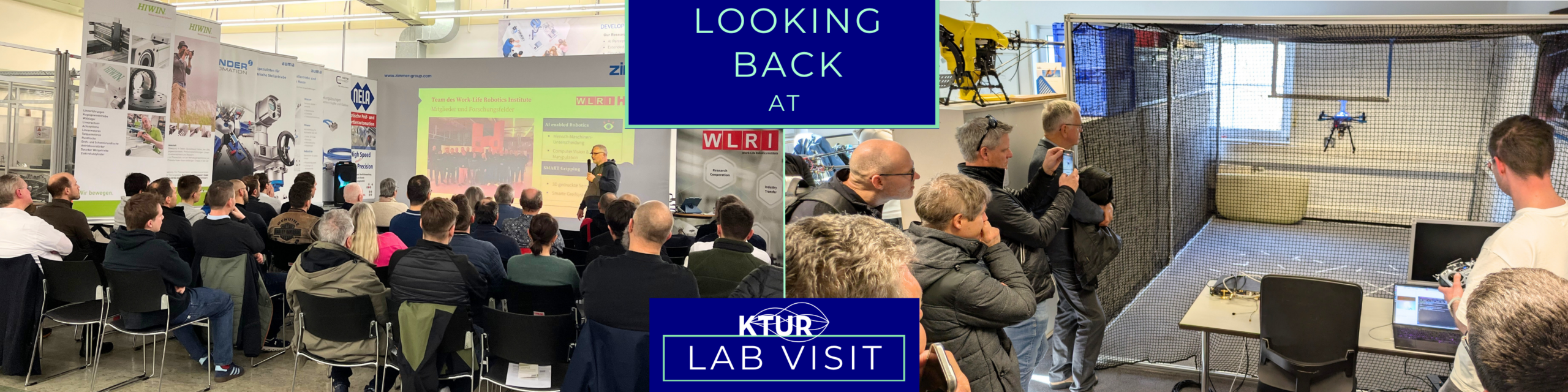
LabVisits - Exploring applied robotics for industrial innovation at the Work-Life Robotics Institute (WLRI) in Hochschule Offenburg
On February 24, 2026, the Work-Life Robotics Institute (WLRI) opened its doors, offering participants valuable insights into applied robotics and its role in driving industrial innovation.
Key research areas include lean-oriented industrial and collaborative robotics, human–robot interaction in real-world conditions, and the development of components produced through additive manufacturing. These approaches aim to create tangible value for companies while opening up new opportunities for innovation and technology transfer.
LabVisits - Exploring advanced drone robotics and radar technologies at the Institute of Unmanned Aerial Systems (IUAS) in Hochschule Offenburg
On March 26, 2026, a visit to IUAS offered participants an in-depth exploration of cutting-edge technologies in drone robotics and radar.
IUAS also highlighted its expertise in radar and antenna technologies for automotive, medical, and industrial applications. With state-of-the-art laboratory equipment, the institute conducts electromagnetic compatibility (EMC) testing, dielectric material characterization, and high-frequency measurements exceeding 100 GHz.
The University of Kaiserslautern opens the doors to its state-of-the-art laboratories
The University of Kaiserslautern hosted a new LabVisit, further confirming the success of this event series dedicated to cross-border knowledge and technology transfer. Despite the summer heat, participants from Strasbourg, Lörrach, and other regions of the Upper Rhine traveled to explore the new laboratory buildings on the Schoenstraße campus.
Led by Vice President Peter Starke and Professor Fabian Weber, visitors were given insight into one of the most modern university facilities in Rhineland-Palatinate. Spanning over 9,600 m², the site offers around one hundred specialized laboratories equipped with cutting-edge infrastructure such as a wind tunnel, a high-voltage laboratory, testing rigs, and an anechoic chamber.
This experience highlights the role of LabVisits: making research and innovation accessible to companies, fostering exchange with scientific teams, and strengthening cross-border collaboration within the Upper Rhine innovation ecosystem.